
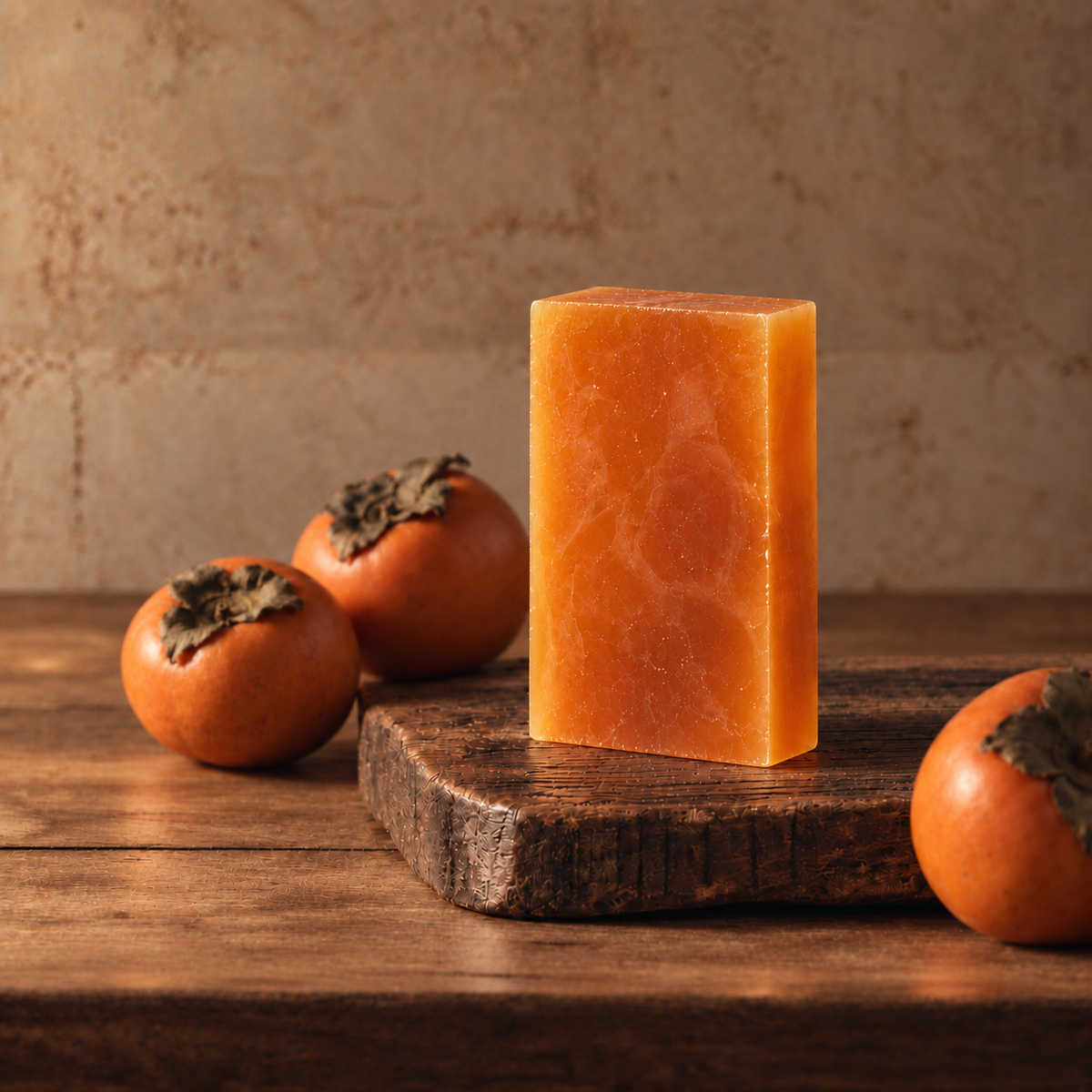


Suōya Deodorizing Persimmon Soap
Couldn't load pickup availability
You’re not imagining it — and it doesn’t mean you suddenly became less hygienic.
Many women notice that the products they’ve used for years just don’t seem to work the same way once they enter perimenopause and menopause. They shower, put on clean clothes, apply deodorant... and somehow that unfamiliar odor is back by lunchtime.
That’s exactly why Suōya was created.
Instead of simply adding another layer of fragrance, Suōya uses highly concentrated deodorizing tannins to help target stubborn odor on the skin — especially when your old shower routine no longer feels like enough.
Because sometimes you don’t need to shower more.
You need a different kind of clean.
Not every soap that says “persimmon” on the label is the same.
Some formulas simply include persimmon extract somewhere on the ingredient list without telling you how much of its deodorizing compounds are actually present.
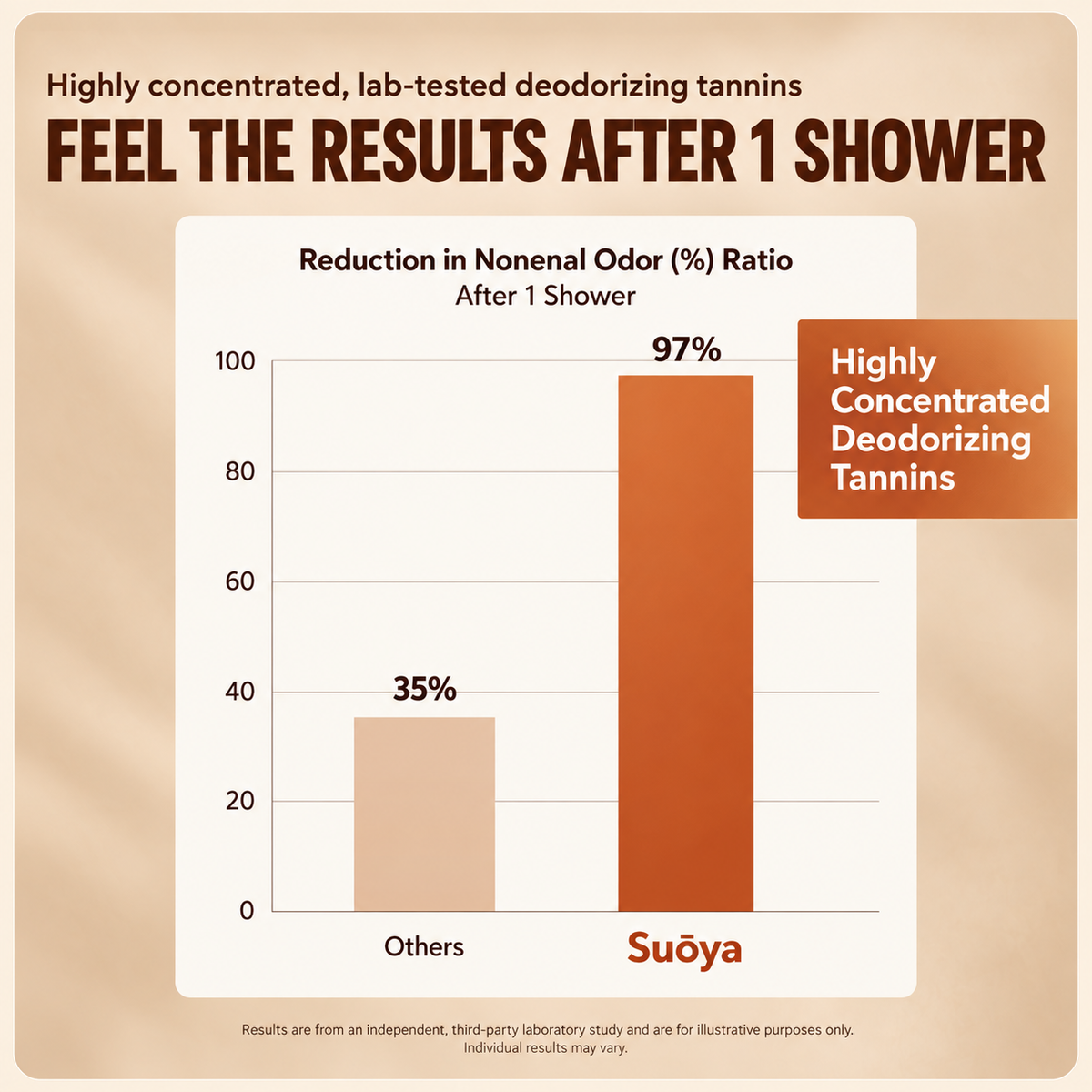
Suōya was formulated around highly concentrated deodorizing tannins, with the tannin concentration independently verified by a third-party laboratory.
That distinction matters because the tannins — not simply the word “persimmon” on the package — are what make this type of cleansing different from an ordinary scented soap.
Suōya is also made in the USA in a cGMP-certified facility, so you know exactly what kind of quality standards are behind the bar you’re using every day.
Masking the smell was never the goal.
If you’ve ever reapplied deodorant, sprayed perfume over your clothes, or switched to a stronger body wash only to realize you can still smell the odor underneath it, you already know how frustrating that can be.
Suōya takes a different approach.
Its concentrated deodorizing tannins are designed to interact with odor-causing compounds on the skin, helping reduce unwanted odor during cleansing rather than simply trying to overpower it with another scent.
The goal isn’t to smell heavily perfumed.
It’s to finally smell like yourself again.
Suōya is designed so that you can feel the difference after your first shower, particularly when the odor is coming from external skin.
For many women, the moment they’re looking for isn’t walking out of the bathroom smelling like perfume.
It’s raising an arm, doing that little sniff test and thinking:
“Wait... I don’t smell it anymore.”
Results can vary depending on your skin, activity level, and the source of the odor, which is why we recommend making Suōya part of your regular shower routine.
With typical use, one bar lasts about 4 weeks even when used twice a day.
Yes. Suōya is intended for external skin, including common odor-prone areas such as:
- Underarms
- Underneath the breasts
- Inner thighs
- Bikini line
- External groin creases
- Other areas where sweat, oil, and odor tend to accumulate
These areas can trap sweat and odor even when you haven’t been exercising or doing anything particularly strenuous.
It’s that frustrating feeling of:
“How do I already smell like this? I barely did anything today.”
Just avoid internal vaginal use and broken or severely irritated skin.
Yes, but freshly shaved skin can naturally be more sensitive, so we recommend being gentle.
A lot of women dealing with stubborn odor eventually turn to harsher solutions like glycolic acid toners, salicylic acid products, alcohol-heavy deodorants, strong exfoliants, and acidic odor hacks.
The problem is that shaving temporarily disrupts the skin barrier, which is why these strong leave-on acids can sting or burn on freshly shaved underarms and bikini areas.
Suōya takes a much simpler approach.
Instead of relying on strong leave-on acids to strip or exfoliate your skin, Suōya is a rinse-off cleansing bar built around deodorizing tannins.
There’s no need to aggressively scrub or repeatedly apply harsh acids throughout the day.
If your skin feels particularly sensitive immediately after shaving, simply wait until the area feels comfortable before cleansing it.
Because your hygiene may not have changed — but the chemistry on your skin can.
Your skin naturally contains a mixture of sweat, bacteria, fatty acids, and oils. As those substances interact and break down, they can create different odor-causing compounds.
One especially important example is 2-nonenal.
Unlike ordinary sweat, 2-nonenal is associated with the oily portion of the skin. It can form when certain unsaturated fatty acids in skin oils oxidize, producing an aldehyde with a distinctive oily, grassy, or stale-type odor.
That matters because an oil-associated odor can behave differently from ordinary sweat. Simply rinsing the area or covering it with fragrance may not fully address what you’re smelling.
And 2-nonenal isn’t the only odor molecule involved.
Body odor can include compounds such as:
- Acetic acid — sour or vinegar-like odors
- Trimethylamine — fishy odors
- Ammonia — sharp, pungent odors
- Isovaleric acid — sweaty or cheesy odors
- Sulfur-containing compounds — strong sulfurous odors
- 2-Nonenal — an oil-associated aldehyde linked with changes in skin odor as we age
This is where tannins are different from ordinary fragrance.
Tannins are polyphenolic compounds with multiple molecular binding sites. They can interact with certain odor-causing molecules, helping reduce the volatile compounds that reach the air where you smell them.
That’s why Suōya uses highly concentrated deodorizing tannins instead of simply trying to cover changing body odor with stronger perfume.
Think about what happens after you chop garlic.
You wash your hands.
They look clean. They feel clean.
Then you bring your fingers to your nose...
You can still smell the garlic.
That’s because removing visible dirt from your skin isn’t always the same thing as removing every molecule responsible for odor.
Some odor compounds can interact with the oils and proteins on the surface of your skin and linger even after washing.
Stubborn body odor can behave similarly.
You can step out of the shower completely clean and still notice that familiar smell returning surprisingly quickly.
And simply making a body wash more fragrant doesn’t necessarily fix that.
Suōya approaches cleansing differently.
Its concentrated tannins contain multiple molecular binding sites that can interact with different types of odor-causing compounds, including acidic, amine, sulfur-containing, and aldehyde-type odor molecules.
So instead of asking:
“How can we make this soap smell stronger?”
We asked:
“How can we help target the odor that ordinary soap keeps leaving behind?”


Research-backed ingredients featured in


Real Women. Real Results
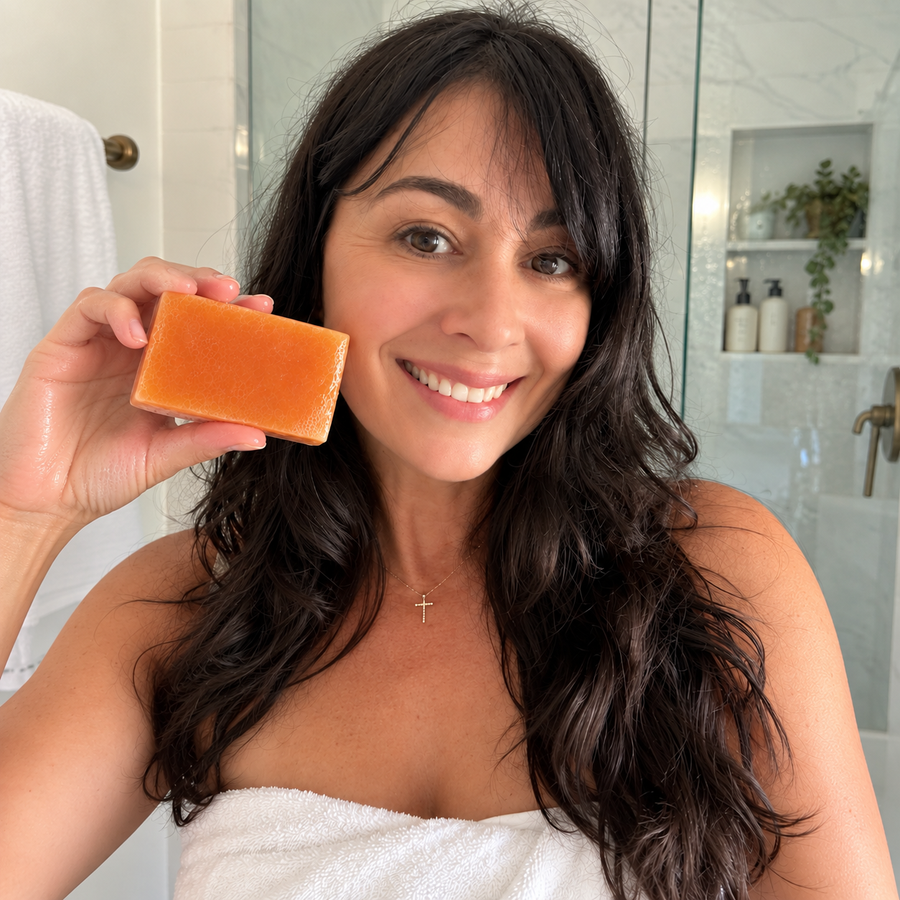
“Y'all NEED to try Suōya persimmon soap. I even use it in my pits and under boobs. It’s moisturizing and the persimmon breaks up the hormonal sweat. Takes away odor so so fast.”
– Denise R.
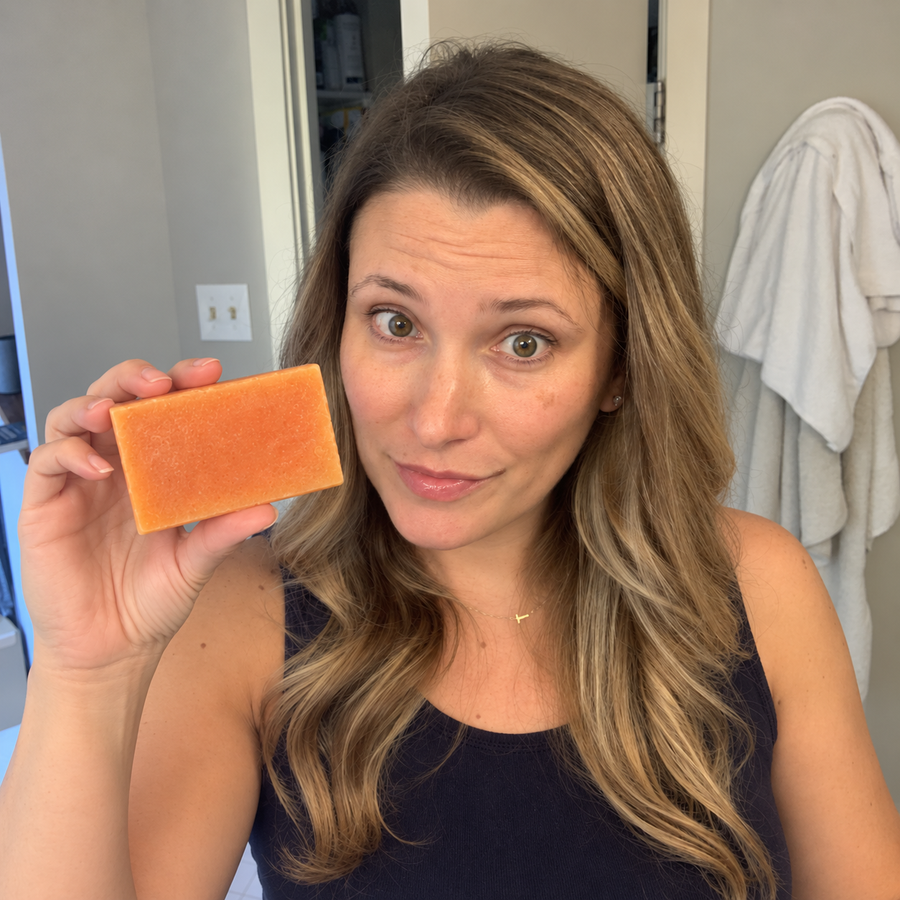
“My preteen and my 50 year old self couldn’t be happier with it!”
– Wendy
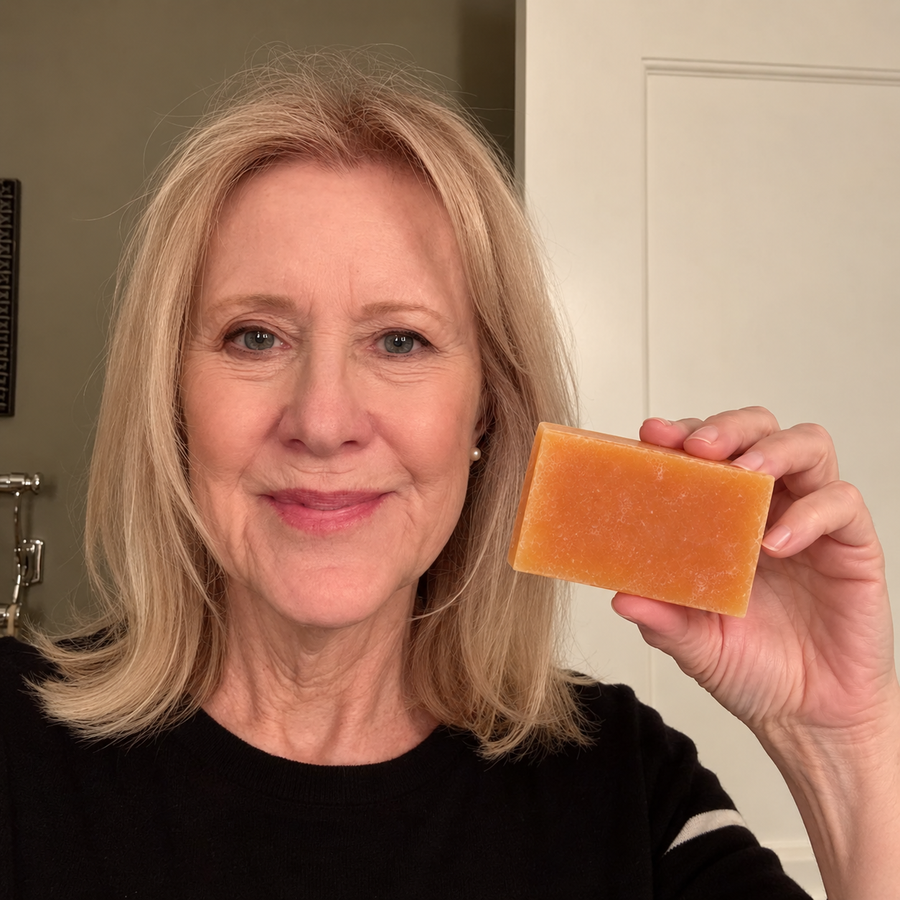
“Suōya is AMAZING!!! I am scent free, and so happy about it!!!”
– Heather L.
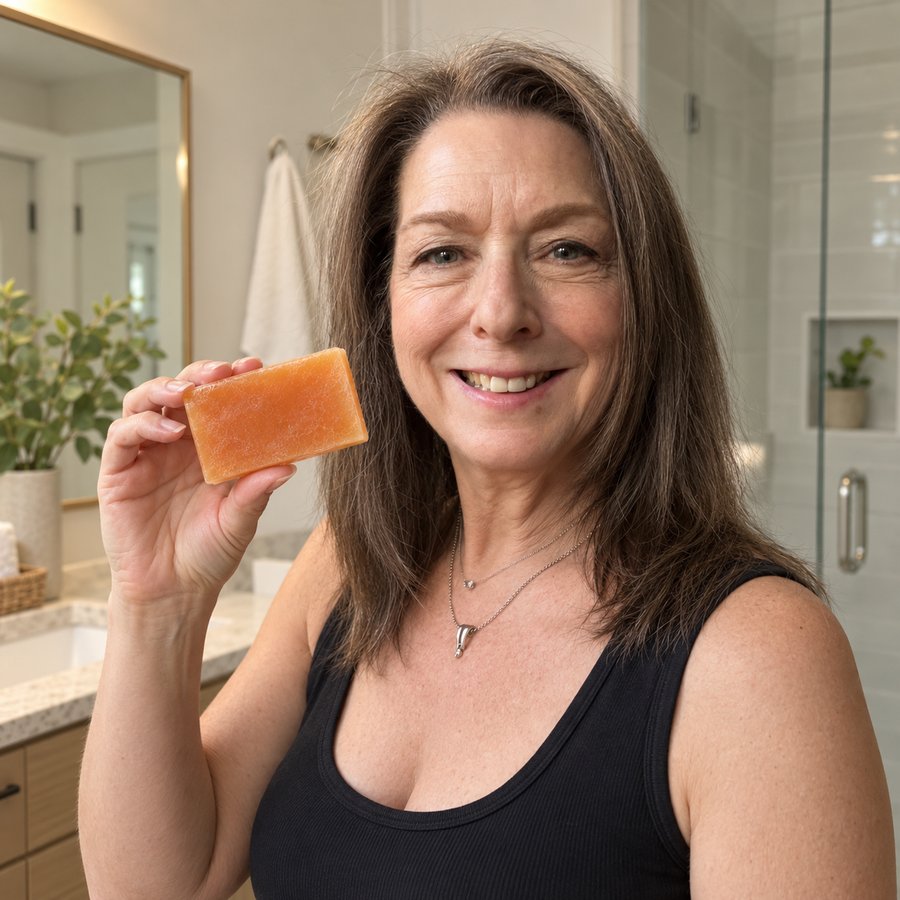
“Love the way Suōya makes my skin feel! It leaves me feeling soft and hydrated and smelling clean.”
– Tammy
Click Below to Smell Like Yourself Again
GET SUŌYA NOWP.S. Your future self will thank you for taking action today.